Editorial
How Do We Find the Balance Between Accountability and Grace?


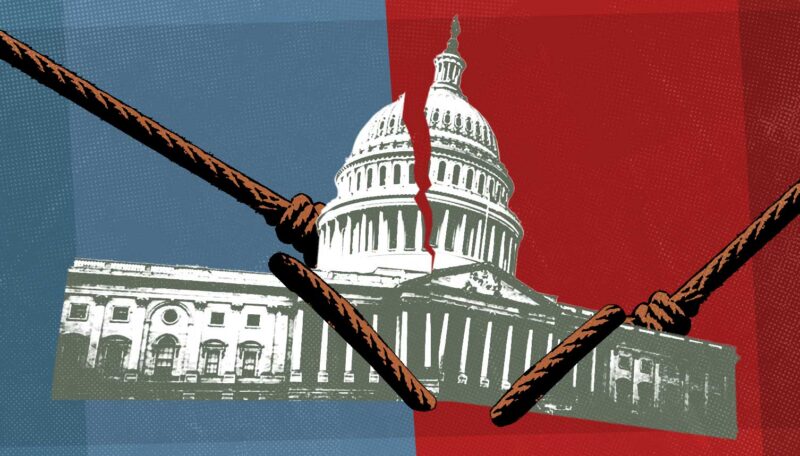
Every political scandal follows the same script: outrage towards the other side, excuses for ours.
Many Democrats condemned Republican figures like Brett Kavanaugh or Matt Gaetz over allegations of sexual misconduct, but defended or downplayed accusations against Bill Clinton or Andrew Cuomo until public pressure mounted. Republicans denounced Hillary Clinton’s email server as a major security breach, but minimized Donald Trump’s handling of classified documents at Mar-a-Lago as overblown or politically motivated.
Each side frames its actions as justified and the other’s as corrupt. And it's not just a hunch: researchers have proven that Americans are more likely to excuse bad behavior from their own party than from the opposition.
It’s human nature to protect “our team.” But that instinct can blind us to the same flaws we condemn elsewhere.
Real progress begins when we stop asking who’s to blame and start asking how accountability and grace can coexist.
When Accountability and Grace Fall Out of Balance
Every healthy society needs both accountability and grace, but when one outweighs the other, things start to break.
When accountability overshadows grace, we can get cancel culture, where moral critique turns into permanent retribution. Over half of Americans now believe it’s gone too far.
But when grace overshadows accountability, we excuse bad behavior because “at least they’re on our side.” Politicians are increasingly exploiting this bias, using blame avoidance to dodge responsibility while loyal supporters rush to defend them.
Accountability keeps integrity alive. Without it, hypocrisy and distrust thrive. It says, our values still mean something—even when it’s inconvenient.
Grace, on the other hand, keeps our humanity alive. It recognizes that people grow through learning, not just punishment. It allows space for change instead of exile.
When grace disappears, people stop listening and start digging in. When accountability disappears, trust collapses. A healthy society requires both.
How Polarization Throws Off the Scales
Polarization throws accountability and grace out of balance.
As political identity turns into moral identity, we automatically start seeing our side as good and the other as bad—an instinctive us-versus-them reflex that kicks in before reason even has a chance. Political scientists call this motive attribution asymmetry—the tendency to assume our motives are pure while theirs are corrupt.
From there, accountability and grace become selective. We hold the opposing side to impossible standards while giving our own endless benefit of the doubt. When this happens, one side feels constantly attacked with no path to redemption, while the other watches hypocrisy go unpunished. Resentment builds on both ends and polarization deepens—each side more convinced the other can’t be reasoned with.
The result is a vicious cycle:
Polarization → selective accountability and grace → resentment → deeper polarization.
How We Can Model the Balance Ourselves
Start with humility. Admit your own blind spots before calling out someone else’s. And you almost certainly have them—confirmation bias makes sure of it. A 2021 study published in the Journal of Experimental Psychology: General found that people tend to put political loyalty over truth when consuming the news. This tendency holds true across the political spectrum, regardless of education level or reasoning ability. None of us is immune.
“We saw an effect of people being more influenced by political alignment than truth,” said Michael Schwalbe, a Psychology scholar at Stanford. “We saw it on both political sides and even among people who scored well on a reasoning test. We were a bit surprised to see how widespread this tendency was. People were engaging in a lot of resistance to inconvenient truths.”
Being open and honest with ourselves about these blind spots is the first step toward holding the leaders on our side accountable. We can’t call out wrongdoing if we refuse to see it.
When we do move to demand accountability, we must do so with compassion. When someone missteps, aim to restore trust with them, not destroy them. Remember that people are learning, struggling, and trying—just like you.
Navigating that space between conviction and compassion takes daily intentionality. Real accountability grows from relationship and trust, not public shaming.
Lastly, we must celebrate leaders who take responsibility for their mistakes. In politics, admitting fault is often seen as weakness. But it’s actually one of the clearest signs of integrity. When leaders acknowledge where they’ve fallen short, they rebuild trust and model the kind of accountability we need. If we want honest politics, we have to reward honesty—not just victory.
Why It Matters for Democracy
Democracy runs on trust, and trust runs on fairness. When accountability only applies to “them,” polarization hardens and shared truth dissolves.
Grace humanizes. Accountability legitimizes. Without both, democracy becomes a game of loyalty instead of conscience.
The point isn’t to blur moral lines. It’s to apply them evenly. Imagine if citizens and leaders alike modeled equal honesty and equal grace. Politics would feel less like trench warfare and more like shared repair work.
Before posting, voting, or judging, ask yourself: Am I holding my side to the same standard? Am I offering the same grace I’d want to receive?
Accountability without grace divides. Grace without accountability decays. Together, they rebuild the trust our democracy depends on.
—Alex Buscemi (abuscemi@buildersmovement.org)
Keep Reading
The 6 Issues Voters Care About Most Heading Into the Midterms

An Israeli, a Palestinian, and a Room Full of Students