Editorial
The One Thing You Can Do Right Now to Heal a Divided Country


Curiosity is the most difficult and demanding virtue we've got. It’s also the one thing you can start practicing today to close the gap between left and right.
By Alex Buscemi, Editorial Manager at Builders
Curiosity gets a bad rap sometimes. In political circles, it can be seen as a weakness: if you’re willing to consider the perspective of the “other side,” you’re one step closer to joining them and betraying your own. Others see it as a nice sentiment, but not something to be taken seriously. I was in the latter group for a long time. “Curiosity” was just a nice-sounding word school counselors used. A starry-eyed one-liner written in cursive on a coffee mug.
But the older I get, the more I realize how important curiosity is. In fact, it’s the one thing you can start doing right now that will genuinely help heal our divided country. It’s also one of the hardest, most demanding virtues to practice.
Our pride whispers we already have the full picture and there is nothing to be gained from hearing someone who sees things differently. Curiosity is the antidote for pride.
Curiosity has deep roots in the moral traditions on which many of us were raised. We learn it early, in church pews or at the kitchen table. We are taught to live with humility. That pride is the first and deadliest of sins. Our pride whispers we already have the full picture and there is nothing to be gained from hearing someone who sees things differently. Curiosity is the antidote for pride. When you ask a question and wait to hear the answer, you're confessing something humbling and true: you don't know everything, and the person across from you has a piece of the picture you’re missing.
We were taught to be quick to listen and slow to speak. The faith many of us grew up in never treated questions as a threat, either. The Bible doesn't use the word “curiosity” exactly, but it encourages a healthy desire to learn and explore God’s creation. It warns that a fool finds no joy in understanding, only in airing his own opinion.
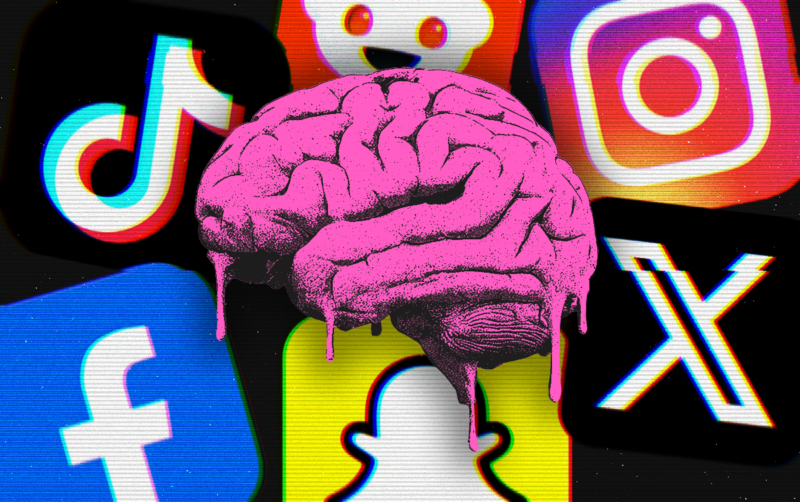
Unfortunately, such foolishness is exactly what scrolls across our screens every day. Algorithms don’t reward curiosity. They reward the content that makes you angry. The kind of content that has you sprinting to the comments section to duke it out with strangers — not to understand them, but to win.
And those impulses — to replace curiosity with pride, to replace questions with “owning” the libs or the republicans — drive the wedge between left and right ever deeper. When we stop trying to understand those different from us, our idea of who they are and what they believe drifts further from reality. And we let the loudest voices — the influencer seeking views, the 24/7 news-cycle pundit promoting his network’s agenda — plug that perception gap with a bad-faith, cartoon-villain version of the other side.
Democrats and Republicans each picture nearly twice as many of their opponents holding "extreme" views as they actually do.
A landmark study by the bipartisan group More in Common set out to measure not what Americans believe, but what they imagine the other side believes. The findings were startling. Democrats and Republicans each picture nearly twice as many of their opponents holding "extreme" views as they actually do.
Only about 15 percent of Democrats agree that "most police are bad people" — but Republicans guessed the number was over 50. Only about a fifth of Republicans deny that racism still exists — but Democrats guessed nearly half. Each side has been arguing, with real passion, against a caricature.
The study also found a stat that should humble even the most confident among the commentariat: people who have higher levels of education and greater political engagement are more likely to have a distorted view of the other side.
But it’s no surprise that more education or more doomscrolling isn’t the answer to truly knowing the neighbors with whom you disagree. Because you already know the answer. You’ve had parents, teachers, and preachers cramming it through your ear and into your brain since you were a child: Curiosity.
It begins with one person, one conversation, today.
Curiosity doesn’t require a grand gesture (I wasn't lying when I said it’s “the one thing you can do right now”). It is built out of small fidelities.
Ask one more question before you reach a verdict. Read the strongest version of the argument you expect to hate: the one written by someone who actually holds it, not the version your own side quotes in order to mock it. Assume good faith for one beat longer than feels comfortable. When the person across from you says something that appalls you, try replacing "How can you think that?" with "How did you come to think that?" And then do the genuinely hard part, which is listening to the answer. Turn down the volume of the pundits whose entire trade is manufacturing the cartoon villain of the other side.
Curiosity isn't easy. And the work will never be glamorous. But nations are held together far more by unglamorous fidelities than by heroic ones. It begins with one person, one conversation, today. Call it a duty to your country. Call it one of the purest forms of love a free people can offer each other. Call it the one thing you can do right now.
Alex Buscemi can be reached at abuscemi@buildersmovement.org
Art by Matthew Lewis
Keep Reading

7 Reasons Politics Sucks Right Now

28 Quotes That Will Change How You See Disagreement