Editorial
Builders vs. Culture Wars: Christopher Nolan’s Odyssey Backlash


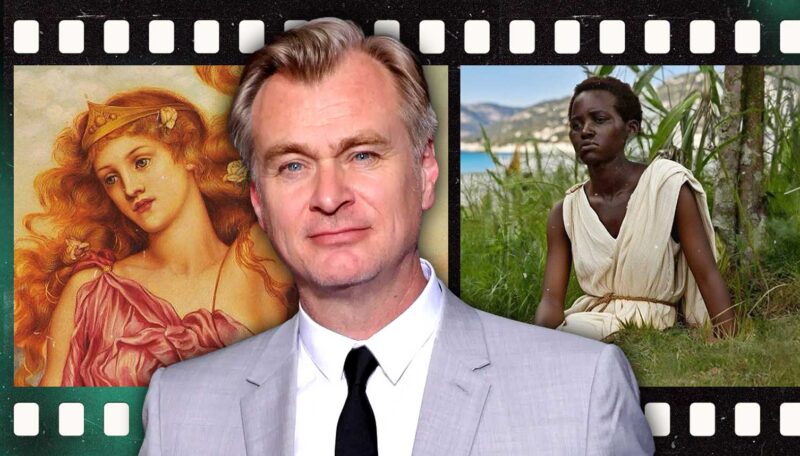
Christopher Nolan is making a $250 million adaptation of Homer’s The Odyssey. Before the movie has even made it to theaters, it’s already been declared a culture war battleground.
The controversy centers on casting choices, particularly news about Lupita Nyong’o as Helen of Troy and rumors of transgender actor Elliot Page as Achilles. Elon Musk and other right-wing figures have condemned the film as ideological propaganda. On the other side, critics of that criticism have been equally swift to label any skepticism as bigotry.
Trying to navigate this situation might feel like Odysseus himself, trying to find a way to sail past a raging whirlpool on one side and a mythic monster on the other. But just like the Greek hero (who will be played by Matt Damon), a Builder can see away to avoid the traps on either side and chart a new path forward.
Art Should Be Expansive, Not Tribal
Filmmakers like Christopher Nolan should have broad creative freedom to interpret classic works however they choose. The Odyssey is mythology, not historical record. Reinterpretation is what living stories do — Homer’s tales have been adapted across centuries, cultures, and forms he never imagined.
At the same time, audiences aren’t morally obligated to love every artistic choice. People are allowed to ask whether unconventional casting serves a story, whether mythology should stay more historically grounded, or whether contemporary politics are influencing storytelling in ways they find distracting. Those are legitimate creative critiques that people should be able to offer, without having their motives or dignity questioned.
The line is when criticism — and response to that criticism — becomes conspiratorial or is simply being used to weaponize outrage. Questioning a casting decision is different from declaring that a Black actress or a transgender actor has no right to occupy a cultural space, and they should be treated as such.
Recognizing Who Wins By Getting Us Outraged
Think about who actually benefits when a single casting announcement becomes a cultural wedge.
Influencers who specialize in culture war content get massive engagement. Algorithms reward the most inflammatory takes. Partisan media on both sides get salacious stories with obvious villains. When figures like Elon Musk — with audiences of hundreds of millions — weigh in, the escalation cycle accelerates fast. Suddenly, a creative choice about a Greek myth becomes a political loyalty test.
That process benefits influencers, algorithms, and partisan media far more than it benefits culture itself. The film becomes almost irrelevant. The Odyssey hasn’t even hit theaters yet, and it’s already been reduced to a flag to fight over. Recognizing that dynamic is the first step toward not being manipulated by it.
Representation and Excellence Are Not Enemies
One of the most persistent assumptions underneath these debates is that inclusion automatically lowers artistic quality — or that any concern about casting is inherently rooted in prejudice. Both of those assumptions are worth questioning. What if you compassionately looked at each side’s opinion with real, good-faith curiosity?
A Builder sees that some audience members may find casting choices that don’t align with their vision of characters to be so distracting that it ruins the story, and recognizes how frustrating it can be to see one of your favorite tales translated in ways that disappoint you.
A Builder would also note the real history of Hollywood excluding actors of color in the past and casting White actors in their stead, and be open to the possibility that a critically acclaimed actress like Nyong’o could offer a novel, insightful take on Helen’s character.
A healthier posture is simpler: judge performances on merit, allow experimentation, resist reducing actors to their identity categories, and resist assuming that audiences with concerns are all acting in bad faith. Some people raising questions about this casting are intentionally trying to stir up racial division. Many are not. Treating those two groups as identical is exactly the kind of binary thinking that makes productive conversation impossible.
The core question for any casting decision should be: Did the storytelling work? Not: Which political tribe won?
The Real Problem: Everything Is Becoming a Battlefield
Underneath all of this is something more troubling than any one casting choice. Americans are increasingly losing shared cultural ground.
Films, sports, mythology, entertainment — spaces that once belonged to everyone — are becoming partisan battlefields. People interpret art primarily through ideological lenses. Citizens see each other less as neighbors and more as opposing factions, even when they’re just watching a movie.
That erosion matters. And it’s worth naming who accelerates it: not filmmakers making unconventional choices or audiences offering genuine critiques, but the outrage ecosystem that converts every conversation into evidence for a pre-existing culture war narrative.
Great art has always reinterpreted old stories for new generations. Audiences should be free to critique those interpretations without turning every casting decision into an identity crisis. That’s a war with no winners.
If the age-old tale of The Odyssey can teach us anything, it’s the power of a story to capture our attention, and to spark conversations that can last for centuries. Let’s keep telling those stories with dignity, instead of tearing each other apart.
Keep Reading
Builders vs. Culture Wars: Christopher Nolan's Odyssey Backlash
What It Really Means to Honor Memorial Day