Editorial
Part of Builders Texas
The Unlikely Coalition Fighting Data Centers in Rural Texas


By Rhea Chowdhary
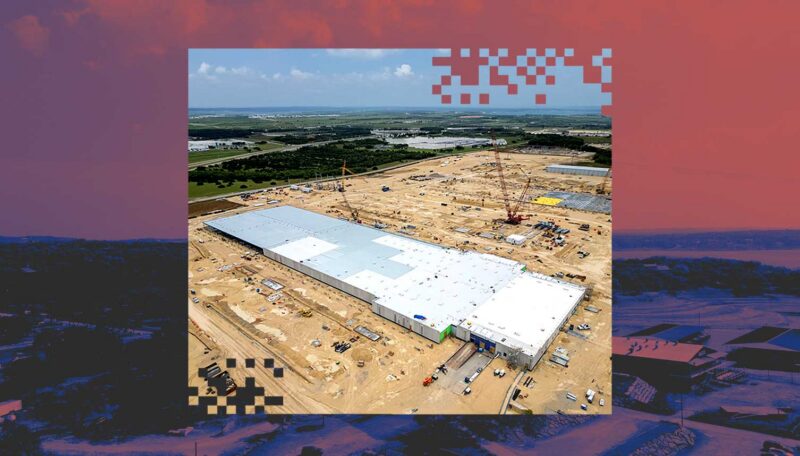
Across rural Texas, data centers are rising faster than almost anywhere in the country, their smooth glassy walls dropped into wide-open ranchland where they look like they arrived from another planet. The state already runs more than 400(opens in new tab) of them, second only to Virginia, and it's positioned to pass Virginia(opens in new tab) as the nation's biggest market by 2030.
But the people who live nearest to these projects have almost no say in whether they get built. And the worry over what the buildout could cost locals — pollution, steeper utility bills, a drain on water and electricity — has created an unlikely alliance.
Uncommon common ground
The anti-data-center movement runs on a coalition that rarely shares a room: largely conservative rural Texans and Democrats. 62%(opens in new tab) of rural Texans oppose building data centers in their communities. So do 71%(opens in new tab) of Texas Democrats. (Rural Texans split from the rest of their party on the issue: only 44%(opens in new tab) of Republicans statewide oppose data center construction).
In a statement(opens in new tab), lifelong Republican and Texas Agriculture Commissioner Sid Miller asked Gov. Greg Abbott to “use some cowboy logic.”
“Let’s put some parameters and guardrails on this industry before it destroys Texas,” he said. “No one wants the grid to go down. I don't care if you're Democrat or Republican. No one wants to be out of water.”
Even country artist Willie Nelson – an embodiment of this rural-cowboy-meets-urban-hippie alliance – has spoken against data center construction in his hometown.
“I grew up in Abbott, and I still have a home there with farmed land where I can still see stars at night,” he posted on Instagram(opens in new tab). “And now our community, like many others, needs to fight against data centers invading our land. The last thing we need is a loud, water-thieving, light-polluting, data center anywhere near our town (or any others for that matter).”
Rural conservatives and urban progressives keep landing on the same side because the issue doesn't sort neatly by party. Communities want more transparency about the trade they're being asked to make: are the touted benefits of data centers — high-paying jobs and a boost in tax revenue — worth the costs? And they want a say in whether construction moves forward before the bulldozers show up.
Pros of building data centers
Of course, data centers can bring real benefits. Everything from your camera roll to your Netflix account runs on them. As does AI, which holds promise far beyond slop videos and cringey LinkedIn posts, like more accurate diagnostics in medicine, accelerated clean energy research (including, ironically, work on more efficient energy and cooling), and advances in military threat detection and cybersecurity.
The money isn’t imaginary either. Texas data centers added $52.6 billion(opens in new tab) to the state's GDP and $3.5 billion in state and local tax revenue in 2023.
Water makes for the loudest argument against data centers. But every data center in Texas today uses under 1%(opens in new tab) of its water. Even if tech companies got their wish to build every center they wanted by 2040, they would still use only a fraction(opens in new tab) of the water swallowed up by agriculture.
The toll of data centers on rural Texas
The deeper issue is concentration. Drop a hyperscale campus onto a small town and you drop an enormous load onto infrastructure that was never sized for it. Strain a rural water source and you invite drought. Spike the grid and you get blackout risk. Park fossil-fuel generation beside people's homes and you get pollution that settles into their lungs.
That's not to mention the costs residents are already paying. Texas electricity rates have climbed about 40%(opens in new tab) since 2020, and analysts warn that in areas thick with data centers, bills could rise anywhere from 25% to 70%(opens in new tab) by 2030 as utilities pass the cost of new power lines and substations on to households. Water is following the same path, with the strain from data centers now driving up(opens in new tab) supply pressure in already-stressed rural areas. And rural communities are especially exposed, since many are served by small electric cooperatives(opens in new tab) that lack the staff and leverage to keep those costs from landing on their members.
There's a wrinkle in the supposed economic benefits, too: The growth these projects promise doesn't always reach the people already living there. The $500 billion Stargate project(opens in new tab) in Abilene pulled in thousands of workers, most of them from out of town. Longtime residents absorbed the higher cost of living without landing the paychecks. And as higher earners moved in, locals were priced out: homelessness got as bad as Abilene had seen in a decade.
Rural Texans have virtually no say in whether a data center is built on their land. Cities can use zoning to keep unwanted projects out, but Texas gives counties almost no zoning authority(opens in new tab), and nearly half the state's planned projects are headed for rural land outside any city, where local officials can listen to complaints but can't stop a project or limit how many resources it drains. Tech companies also receive federal tax breaks for targeting these so-called opportunity zones(opens in new tab), giving them extra reason to build in communities with no ability to push back.
Making rural voices heard
Efforts from the bipartisan coalition offer hope for change. Largely Republican rural county officials have pressed the Legislature(opens in new tab) to hand them real power over these projects. And Democrats running statewide have also made a push, like James Talarico, who has called(opens in new tab) for communities to decide for themselves whether the centers get built.
The alliance notched a win on Aug. 3 when Gov. Greg Abbott directed(opens in new tab) the Public Utility Commission of Texas and ERCOT to run a comprehensive audit of the data center projects in the grid queue, 250 to 300(opens in new tab) of them, before any can connect. Projects that don't comply get denied. It marks a shift away from a first-come, first-served scramble and toward a scrutinized review built to catch resource exhaustion and grid failure before they hit.
The audit won't settle everything, but it signals something rural Texans have been asking for all along: a government that answers to the people who live with these projects, not just the companies building them. That's not a red or blue idea — it's plain old accountability, and Texans across the political spectrum are proving it still has teeth.
Rhea can be reached at chowdharyrhea5@gmail.com(opens in new tab)
Keep Reading
The Unlikely Coalition Fighting Data Centers in Rural Texas

Trump Wall in Big Bend: 6 Things You Need to Know