Editorial
Legendary Pitmaster Ryan Mitchell Tells Us What He’s Learned About Bringing People Together


By Alex Buscemi, Editorial Manager at Builders | 6 min read
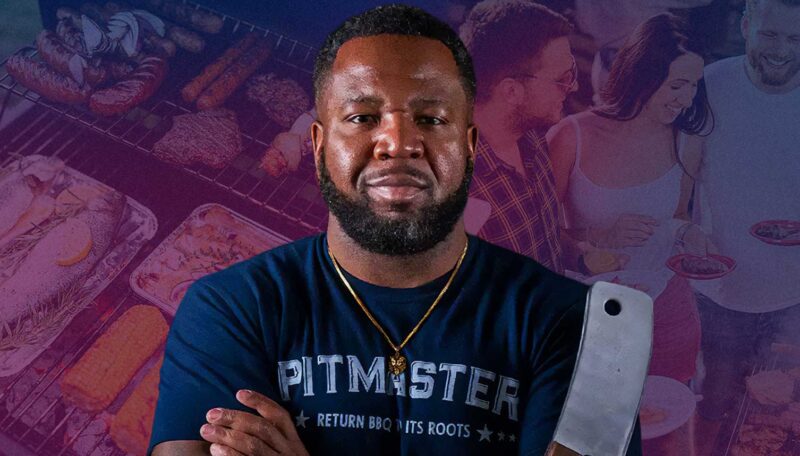
Ryan Mitchell comes from a long line of pitmasters. His grandparents were sharecroppers who cooked whole hog over oak wood in the same barns where they cured tobacco. His father Ed took the family recipe to new heights, and it’s since been featured by the Food Network, Bon Appétit, The New York Times, and more. Ryan himself walked away from an eight-year career in investment banking to stand beside him at the pit. There, Ryan saw the unlikeliest people end up at the same table. Vegetarians beside carnivores. Corporate execs beside gang members. Old racial and political divides dissolved in the smoke. It convinced him of something he says often: barbecue is "too inclusive to be divisive."
Since returning to the pit, Mitchell has received a James Beard nomination. He and his father have teamed up to pen a best-selling cookbook and launch a line of all-natural condiments. We sat down with Ryan to talk about why sharing a meal face-to-face matters more than ever and what he's learned about bringing people together who never thought they'd sit side by side. He's also helping us launch the Builders BBQ Challenge this summer, an invitation to fire up the grill and do exactly that in your own backyard. Pull up a chair.
AB: Good food has this remarkable ability to bring people together. Why do you think those face-to-face interactions matter so much today?
RM: We spend so much of our lives communicating through screens that we sometimes forget what it’s like to sit across from someone and share a meal. A table of shared food is almost therapeutic. Barbecue forces people to slow down. You aren’t rushing through a quick lunch—you’re spending time together, talking, laughing, and making memories. Around a table, people tend to see each other as human beings first and that’s where real connections begin.
AB: You spent eight years in investment banking before returning to the pit. What ultimately drew you back to barbecue, and how did that career change your perspective?
RM: My time in investment banking was certainly among the most valuable in my career. But, truthfully, I was laid off after a huge industry downturn. I wasn’t the same after that. The trauma from that experience made me realize I had spent too much time seeking validation and not enough time pursuing a legacy. I missed creating something tangible and bringing joy to people. Barbecue gave me that opportunity. Standing beside my father was priceless. Every cook is different, every customer has a story, and the work inspired my anointing in a way that numbers on a spreadsheet never did.
AB: You’ve said that barbecue is “too inclusive to be divisive.” What do you mean by that, and are there moments you’ve witnessed that really brought that idea to life?
RM: I grew up watching the entire process from the farming, to butchering, to the cooking, and so the circle of life and survival is at the center of the craft. Everyone was needed, and I think the agricultural community gets left out at today’s dinner table. My parents and grandparents were sharecroppers and worked in the tobacco barns, where oak wood was curing tobacco and used for barbecuing. So my first interaction with barbecue was a little more intense than just a family cookout [laughs].
AB: Who are some of the people you’ve seen barbecue bring to the same table who probably wouldn’t have crossed paths otherwise? What happens when they do?
RM: My grandparents opened Mitchell’s supermarket in 1985. I’ve watched people from different races who were at total odds with each other build new and more respectful bonds with each other over a whole hog. We were fortunate enough to be selected as founding Pitmasters of the Big Apple BBQ block party from 2002 to 2017. For 15 years straight, every summer, I was at the epicenter of changing lives and merging cultures and mending relationships at Madison Square Park through the craft of barbecue. I saw vegans have a safe space with non-vegans, gangsters and corporate leaders share a sandwich, politics be put aside and racial division be removed all in the name of hospitality, passion, smoke, flavor, fire, and meat. That’s one of barbecue’s greatest strengths: it creates an environment where connections happen naturally.
AB: Whole-hog barbecue has deep roots in Black American history, including histories of ingenuity, celebration, and survival under oppression. How do you honor that history while keeping your table open to everyone?
RM: My grandmother would often say, the secret ingredient is love — love for humanity, hospitality, and the ancestors before me. Honor has been about being unapologetic with the truth about the pain and the conflict, combined with hospitality. I don’t think those things can be separated. Honoring history means telling the truth about where this tradition came from and who carried it forward. Once people know that story, they’re welcome to sit down and enjoy the meal. After that, it makes no difference to me what your background is. Barbecue has always been about community. You don’t erase the past to bring people together—you acknowledge it, respect it, and then you make room at the table for the builders.
AB: You’ve spoken about both the pride and the painful history connected to this craft. How do those different parts of the story show up for you when you’re cooking?
RM: Every time I light the fire, I think about the generations before me. Our book speaks to that. My grandfather cooked barbecue because he was forced to. My Dad and my uncles cooked barbecue because it was a livelihood. And I get to cook barbecue because I’m incredibly skilled at it and hospitality is a passion. That takes generations of sacrifice with zero acknowledgment from the food network or cable TV. That’s the painful part. The pride comes from knowing their knowledge survived. Every plate I serve is a way of honoring them while creating new memories that are filled with joy instead of hardship.
AB: What do you hope your kids—or the next generation of pitmasters—understand about why this tradition matters beyond the food itself?
RM: I hope they understand they’re inheriting more than recipes. I hope they continue to use the smoker as a therapeutic tool of humility, service, and community! I’m fortunate because my boys love the outdoors, but this is literally the last portal before AI domination. They’re inheriting patience, craftsmanship, generosity, and history. Cooking a whole hog teaches you to slow down, pay attention, and take care of people. For them, there are 1000 different ways to get a meal, but if they remember that barbecue is really about serving others and preserving a tradition, then they’ll be carrying the culture forward.
AB: For the home cook who’s nervous about hosting, what’s one thing they can do to make people feel genuinely welcome, beyond just getting the barbecue right?
RM: Unlike network TV, people really don’t remember whether the bark was perfect or the sauce had the right amount of vinegar…kinda [laughs]. They remember how you made them feel. They might judge your charcoal wood smoker vs your pellet grill, but they can take that up with Lowe's and Home Depot. They truly only care about the hospitality and the time you sacrificed. Greet folks at the door. Make sure everybody has a paper plate and a red Solo cup! Introduce people who don’t know each other. Feed people with generosity, not perfection. Hospitality isn’t about impressing people—it’s about making sure everyone feels like they belong.
AB: If someone is skeptical that sharing a meal with a person they disagree with can make any difference, what would you want them to understand?
RM: I’m not saying one meal solves every problem. I love being in those environments and challenging people to be a part of the service. Grab a serving dish and hand it to someone, say thank you and you’re welcome to an adversary. It gets awkward reducing somebody to a stereotype when you’ve sat across from them, passed them a plate, and heard about how their kid has the same challenges as yours. Or how both of you have the same midlife crises. I’ve seen enemies have the same exact same food allergies, and now you’re at the gluten-free table bonding! You never know. Barbecue creates space for conversations that might not happen anywhere else. You can disagree and still treat each other with dignity.
This summer, we’ve teamed up with Mitchell to launch the Builders BBQ Challenge, where Builders across the country are coming together to fire up the grill. Hosts are encouraged to invite friends, family, or neighbors, including people who may see the world differently.
Keep Reading
30 Quotes That Define America
Legendary Pitmaster Ryan Mitchell Tells Us What He’s Learned About Bringing People Together